
Large Pipe Straightening Machine
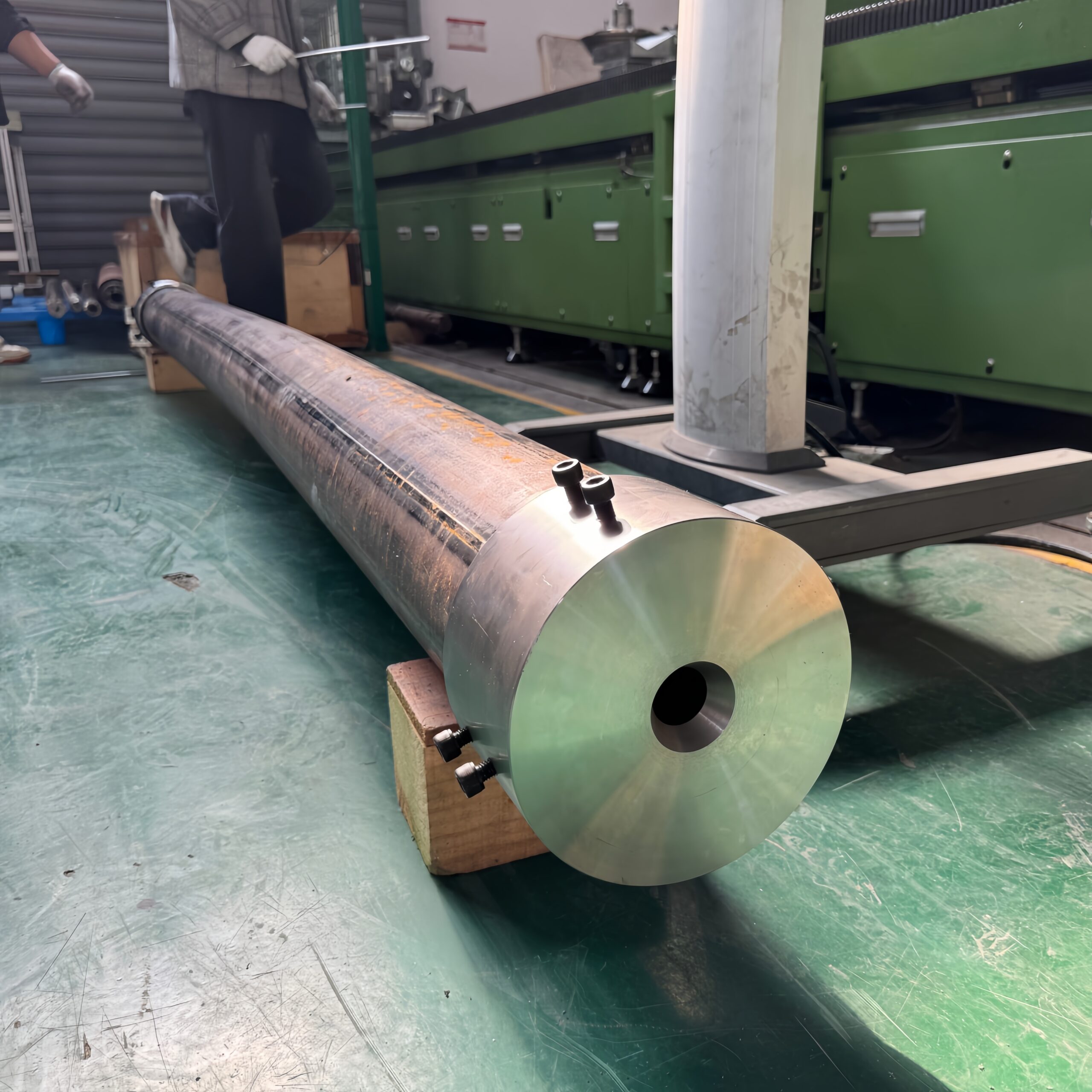
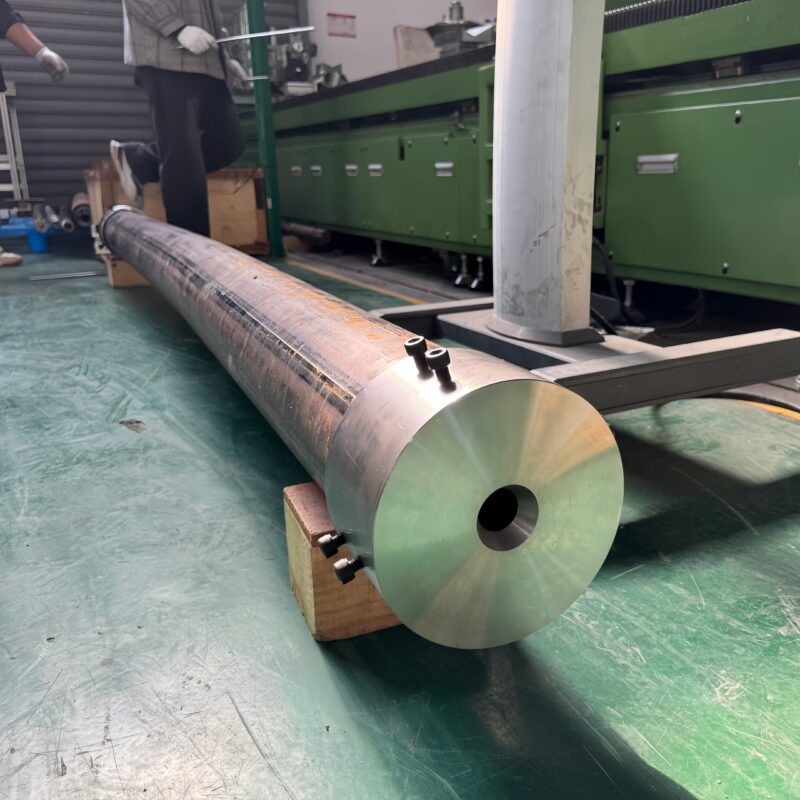
A recent application involved pipes of 180 mm diameter and 3,200 mm length with a required straightness of 1 mm across the full length. Pipes in this size range are stiff, heavy and awkward to handle, which is exactly why they are straightened on a purpose-built machine instead of by hand.
Pipe size: 180mm diameter, 3200mm length and 1mm straightness is required
Why Large Pipes Are Harder to Straighten
As pipe diameter and length grow, three things change at once. First, the press force needed to produce a given correction rises with section stiffness, so the machine must have enough tonnage and frame rigidity to deliver it without deflection of its own. Second, a long pipe sags under its own weight between supports, so the measurement system must separate true bend from gravity sag, otherwise the machine will chase a bend that does not exist. Third, handling becomes part of the process: loading, rotating and clamping a 3-meter pipe safely takes powered movement, not muscle.
A large pipe straightening machine answers all three points in one system: high-capacity pressing, multi-point measurement along the full length, and powered workpiece handling between measurement and correction stations.
Workpiece Range
Our machine:
This machine is suitable for rod straightening, shaft straightening, drill pipe straightening, steel pipe straightening and bar straightening, and it is especially suitable for drill pipe straightening, where long stiff workpieces and strict acceptance limits are the norm. For background on specific tubular families, see the guides on seamless steel pipe automatic straightening and thin-walled metal pipe straightening; the general selection logic for shafts, profiles and tubes is compared in how to select a straightener for shafts, profiles and tubes.
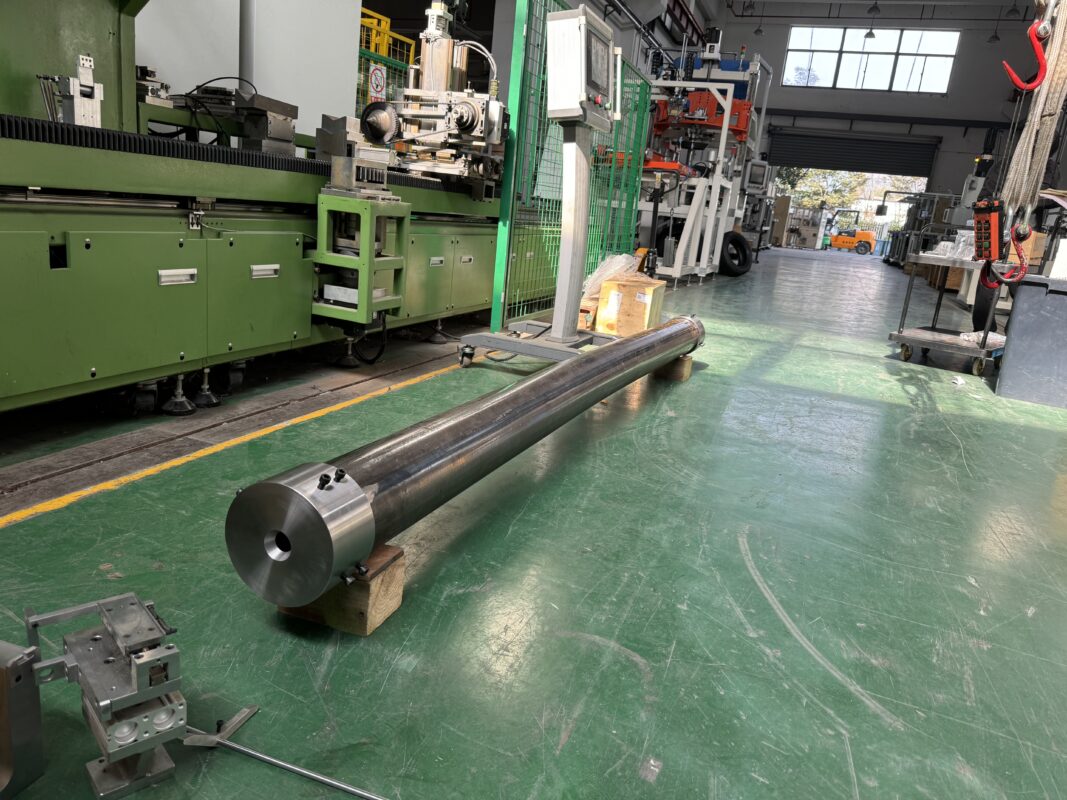
Machine Photos


Machine Video
Machine video:
Specifying a Machine for Large Pipes
Three specifications dominate the machine design for a large pipe application. The press capacity must cover the stiffest pipe you will run, not only the average one, because a machine sized on the average part will stall on the worst part. The distance between supports and the measurement span must match the pipe length, with enough sensor channels to map the full profile rather than a few sampled points. The handling system must move the pipe between stations without introducing new bend, which rules out lifting arrangements that support the pipe at arbitrary points.
It is also worth deciding early how the result will be accepted. If the customer measures the pipe on their own gauge after delivery, the machine measurement and the customer gauge must correlate, and the only way to prove that correlation is to measure the same pipes both ways during the trial. Disagreements between machine and customer gauges are one of the most common sources of rework disputes in pipe straightening, and they are cheap to prevent and expensive to fix.
What to Send for a Large Pipe Trial
To propose the right configuration we need the pipe diameter, wall thickness, length and material, the required straightness with its gauge definition, and photos or samples of the pipes as they arrive from your upstream process. With sample pipes we can run a trial on the actual machine, record the before-and-after runout profiles, and attach the measurement data and video to the proposal, so the decision is based on evidence rather than on catalog numbers.
Safety belongs in the specification from the first revision, not the last. Large pipes store significant elastic energy under press load, and the guarding, support locking and emergency stop concept of the machine determine whether the straightening cell can be operated by one person on a normal shift. We document these points together with the straightness capability so the evaluation covers the machine as it will actually run.