
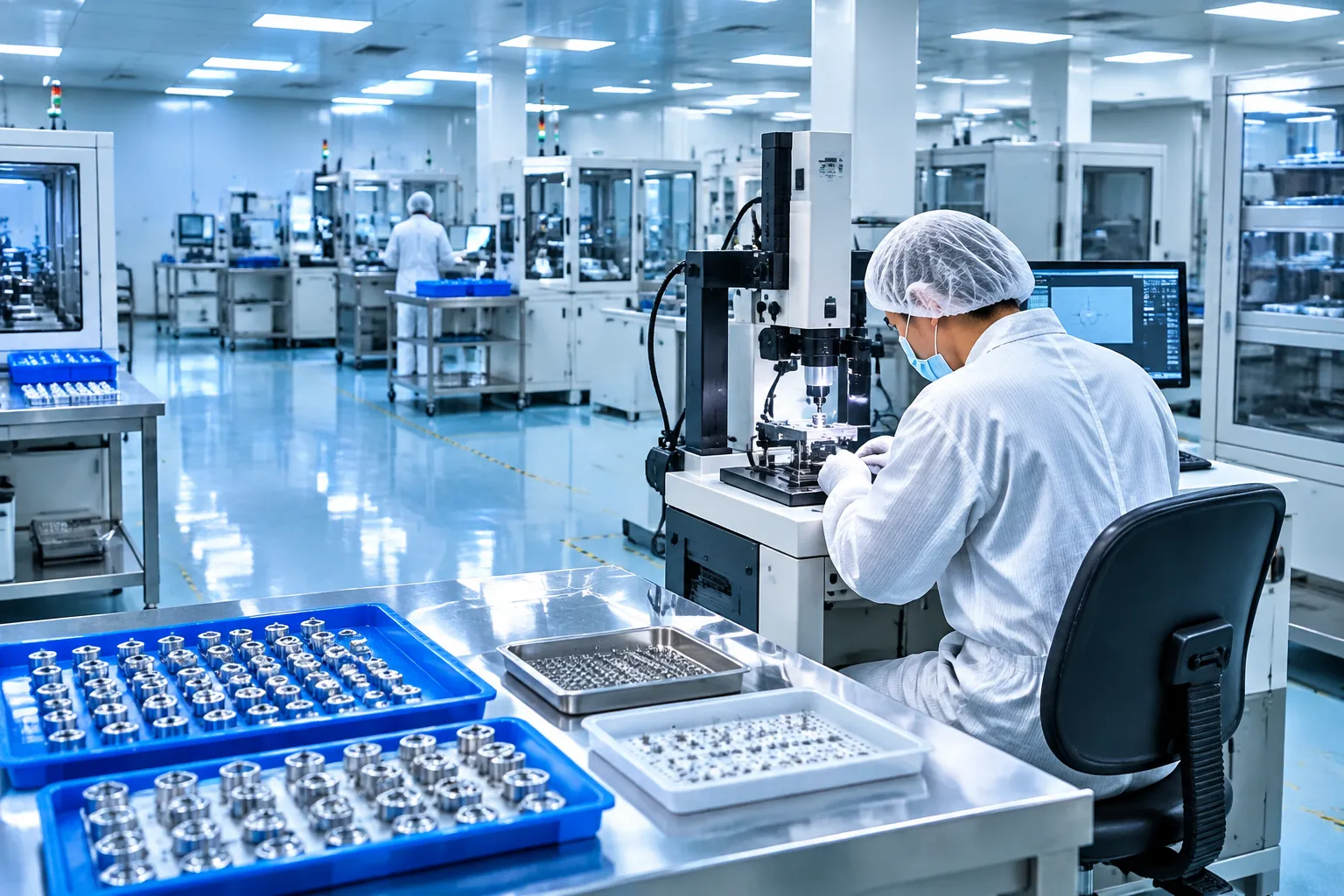
Medical device solutions from our straightening engineering team cover the precision components that minimally invasive and surgical instruments depend on: needles, drills, wires and mandrels measured in hundredths of a millimeter. Intelligent straightening technology, multi-round correction and real-time monitoring secure the straightness and coaxiality of key dimensions — the geometric guarantee behind device safety and regulatory traceability.
Application Fields of Medical Device Straightening
Orthopedics
- Orthopedic drill bit
- Orthopedic positioning pin
- Intramedullary nail
- Bone plate fixation rod
Neurosurgery
- Cranial drill bit
- Ventricular puncture needle
- Directional biopsy needle
- Neurostimulation electrodes
General Surgery
- Puncture needle
- Biopsy needle
- Guide pin
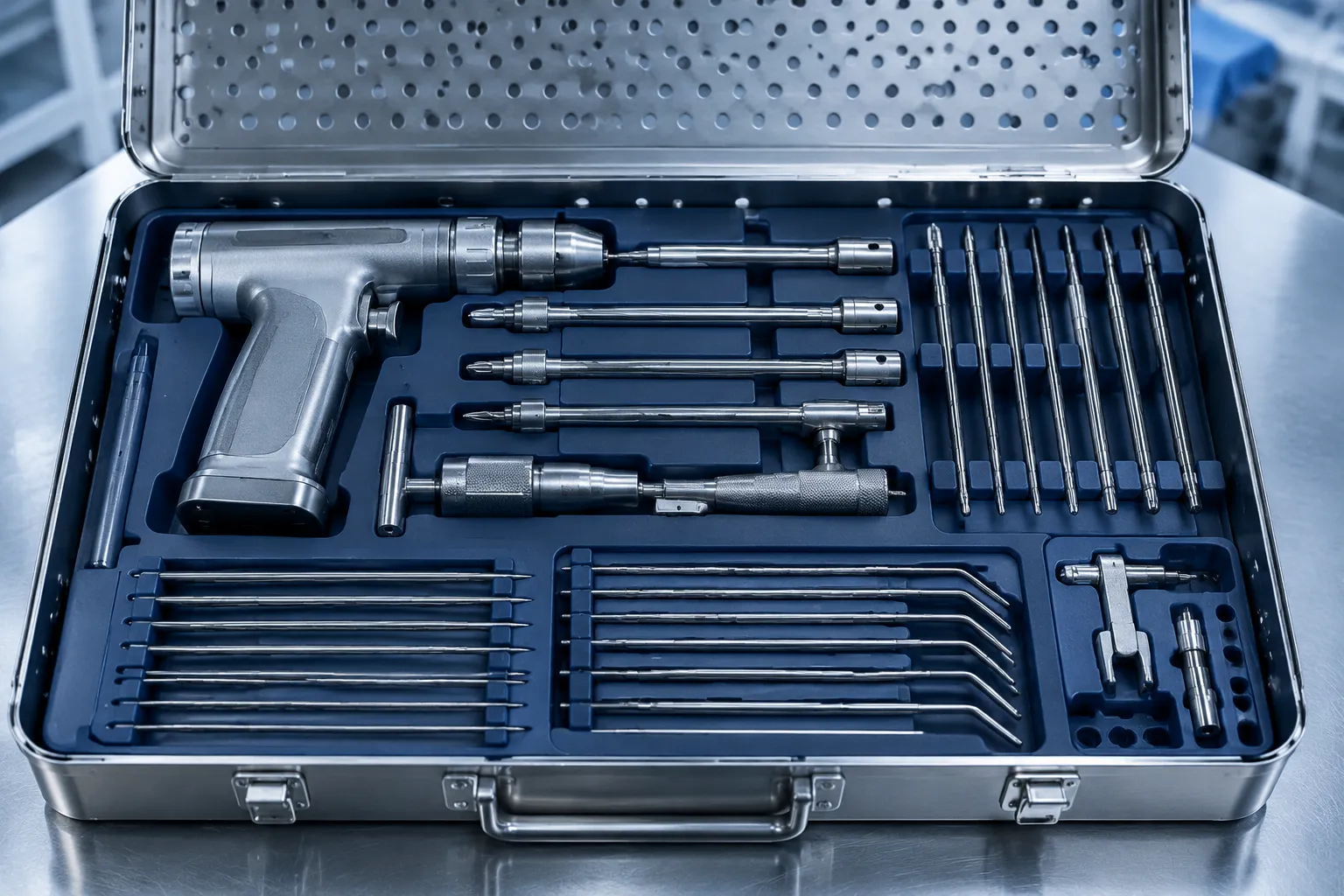
- Surgical instruments
Minimally Invasive Devices
- Endoscopic instruments
- Guide wire
- Catheter mandrel
- Stent delivery system
The Three Component Lines
Medical Needle Straightening
Guide pins, puncture needles and biopsy needles: needle tube straightening with precision pressure control and multi-stage correction, cut and finished with scratch-free surfaces. The dedicated medical needle straightening machine page carries the family detail — guide, puncture and biopsy scope, materials from stainless to titanium, and the automatic stability detection the line runs on.
Medical Drill Straightening
Orthopedic, dental and neurosurgical drill bits at 0.01 mm-class runout. The medical drill machine page covers the correction discipline for hardened micro-drills, where flute protection and shank-datum acceptance govern the cell.
Medical Wire Straightening
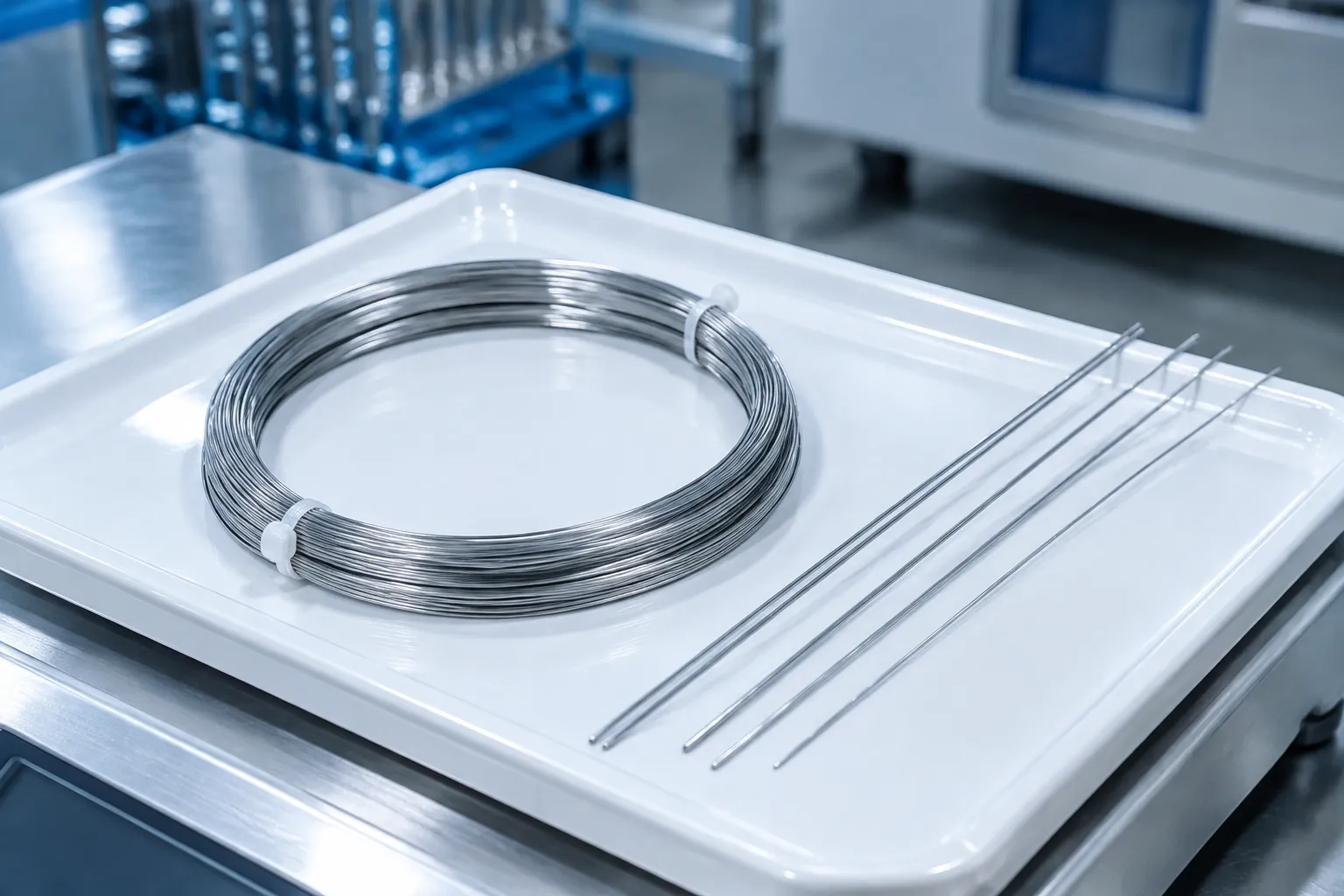
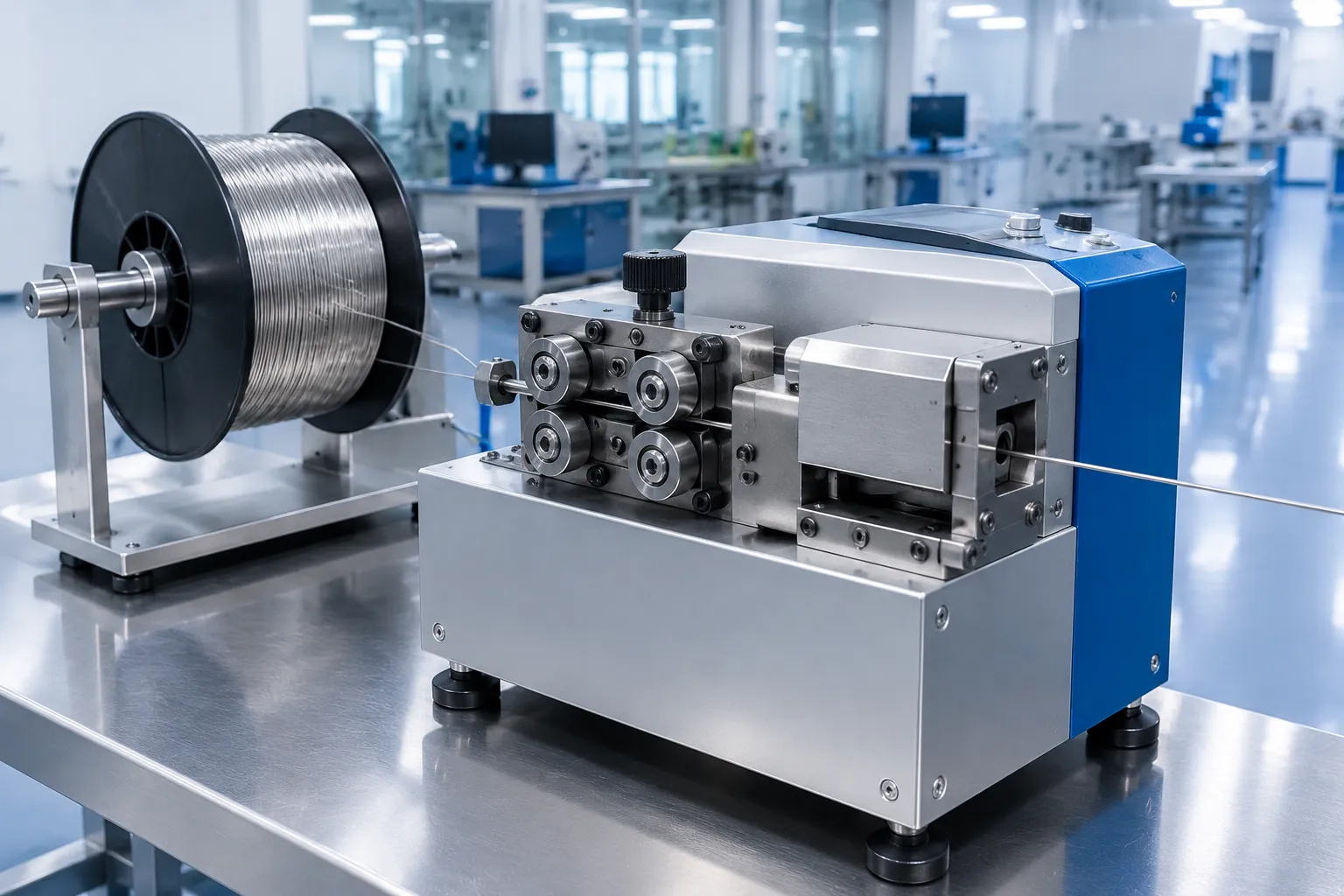
Medical wire straightening and cutting for guide wires, catheter mandrels and stent delivery components — including ultra-fine medical wire below 0.5 mm, where the wire is measured and corrected in a support state that does not write its own bow into the part. Fine stainless and precious-alloy wire runs from spool pay-off through multi-stage straightening to burr-controlled cutting in one cell; the wire line overview is on our wire straightener page.
One Automatic Cycle Logic Across the Lines
Every medical cell runs the same automatic cycle: the operator loads and unloads parts on a conveyor or directly at the straightener, presses auto start, and the machine —
- measures the bend defect,
- locates the straightening points,
- presses and straightens,
- checks that the bend is removed.
What medical work adds on top: full-process quality control with intelligent monitoring that adjusts alignment parameters automatically, batch-to-batch consistency as a machine property rather than a staffing question, and per-piece records for the traceability file.
Why Device Manufacturers Buy the Cell Rather Than Outsource Correction
- Process ownership: straightening sits between wire drawing, heat treatment and grinding; owning it keeps the whole thermal-geometric chain under one quality system.
- Yield on expensive stock: titanium and precious-alloy wire scrapped to over-correction is raw material lost — measured pressing keeps blanks in tolerance.
- Audit readiness: stored parameters and results per lot answer device-audit questions without a manual reconstruction exercise.
- Material breadth: stainless steel, titanium, gold, silver, molybdenum and spring steel families run on shared platforms with per-material recipes.
Across all three lines the working straightness class is 0.01 mm per 100 mm — the normalized figure device drawings and acceptance documents quote, and the reference point the sample-test protocol locks per component family before any cell is confirmed.
FAQ
Which medical components can one straightening platform cover?
Needles, drill bits, wires and mandrels share the measure-press-recheck cycle; the fixtures, force class and measurement strategy change per family, recalled as recipes rather than rebuilt as machines.
How is straightness verified on medical parts?
Rotating measurement against datum features in a support state that does not deflect the part — the micro-scale version of the same datum discipline used on shafts and pipes — with 100% release checks on functional families.
Do the machines support cleanroom installation?
Cells are specified for device-plant environments, with enclosed correction zones and process records; cleanroom-class packaging is quoted per project.
Bring component drawings and tolerance targets to contact us, or start from the component line pages: needle, drill, and wire straightening.