
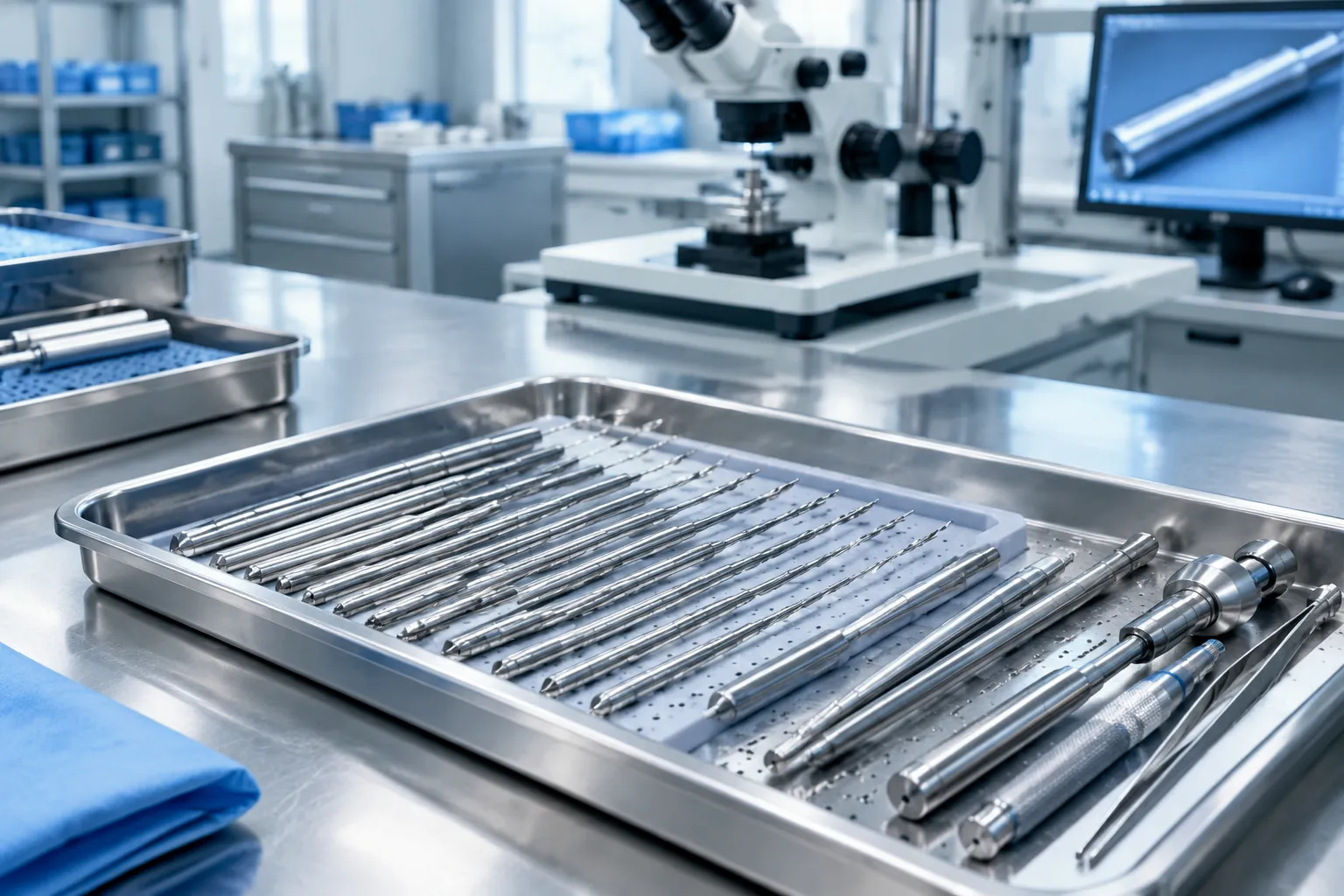
A medical drill machine line — our medical drill straightening and manufacturing equipment — exists because surgical drill bits are among the thinnest, hardest, tightest-tolerance rotating parts made anywhere in industry. Bone drills, dental implant drills and craniotomy bits measure their straightness budgets in hundredths of a millimeter at diameters under 3 mm, and medical drill manufacturing lines need correction equipment that measures without deflecting the part and presses without marking it.
Where Medical Drill Straightening Sits in Manufacturing
Surgical drill blanks leave heat treatment with the same residual-stress bow any slender hardened part collects; the straightening cell then has to deliver rotating accuracy for the operating room:
- Measure-first correction — each blank is mapped for bend location and magnitude before any press cycle, on supports gentle enough not to add their own deflection.
- Protected contact — flute zones never take tooling load; presses act on the shank lands through soft supports.
- Runout acceptance — a drill straight in the body but off-axis at the shank still cuts oversize holes; release is judged on runout measured from the shank datum.
- Full traceability — per-piece records link drill lots to machine parameters, the audit trail medical manufacturing expects.
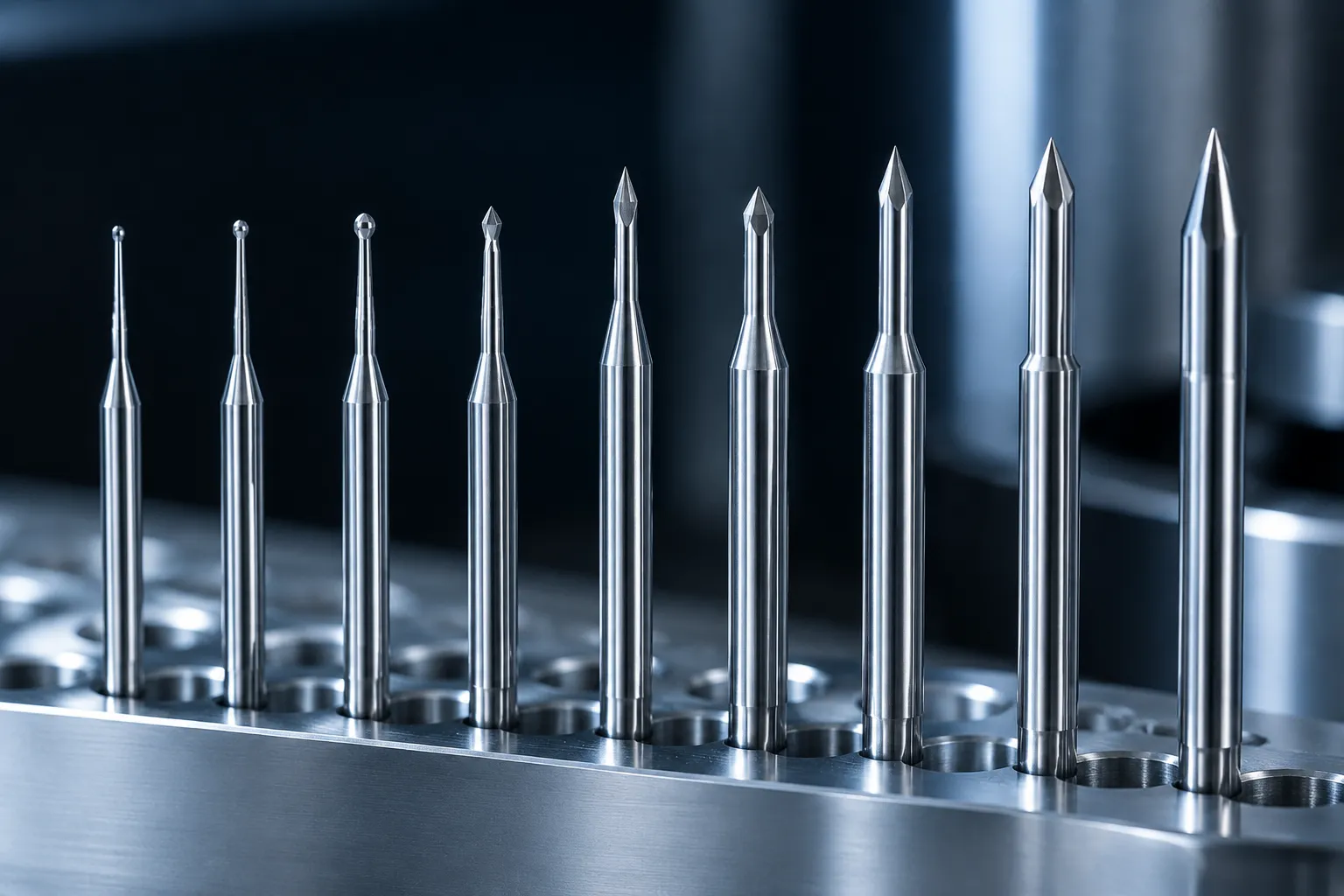
Surgical Disciplines and Drill Types in Scope
Orthopedic Surgery
Precision straightening of orthopedic drill bits across trauma surgery, joint replacement and spine work.
- Bone drill / core drill
- Medullary cavity reamer
- Screw drilling bits
- Joint replacement drill
Dental Treatment
Implant and endodontic procedures run small-diameter drills at high speed; a micro drill bit alignment process holds concentric geometry so the drill tracks the implant site precisely.
- Implant drill bit
- Root canal treatment drill bit
- Dental preparation drill bits
- Bone tissue drill bit
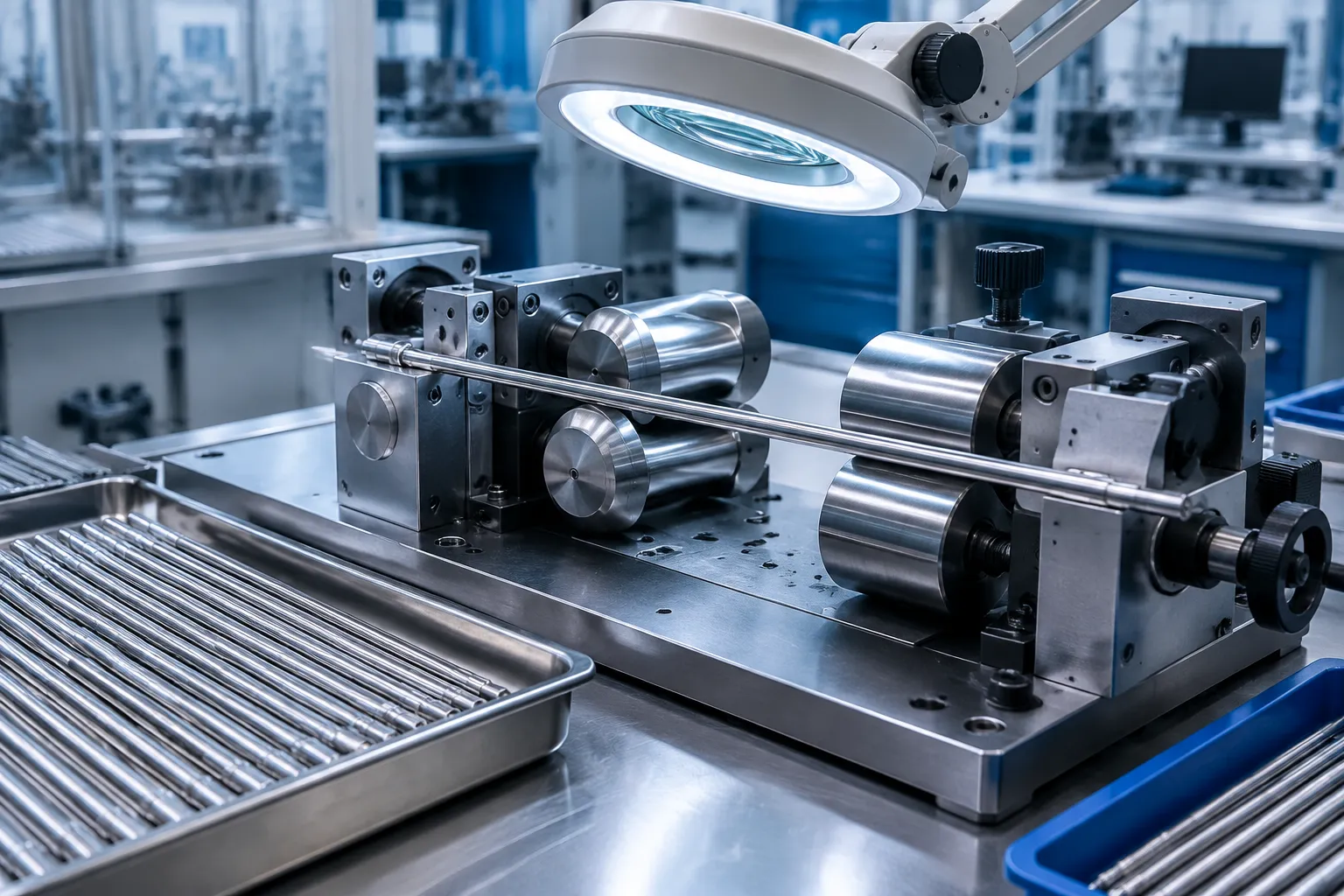
Neurosurgery
Cranial work leaves no margin for runout: skull drill bits, minimally invasive drills and craniotomy bits demand the tightest alignment class on this page.
- Skull drill bit
- Precision minimally invasive drill bit
- Lamina drill bit
- Precision craniotomy drill bit
What the Machine Delivers
- Material quality: straightening relieves internal stress effects from heat treatment, avoiding later bending and twisting during grinding and use.
- Production efficiency: automatic feeding and cycling outpaces manual correction on every lot size that matters.
- Waste minimization: measured pressing keeps blanks in tolerance instead of scrapping over-pressed parts.
- Yield: consistent correction reduces rework from material-condition rejects.
- Applicability: steel, stainless and the other medical alloys share the platform with per-material recipes.
- Labor and safety: the process no longer depends on the hand skills of individual technicians, and batch-to-batch uniformity becomes a machine property rather than a staffing question.
Machine test reports for medical drill bit lots — diameter ranges, runout targets and per-lot results measured on sample parts — are collected on the machine test reports hub, so the acceptance basis for each drill family stays visible next to the correction process.
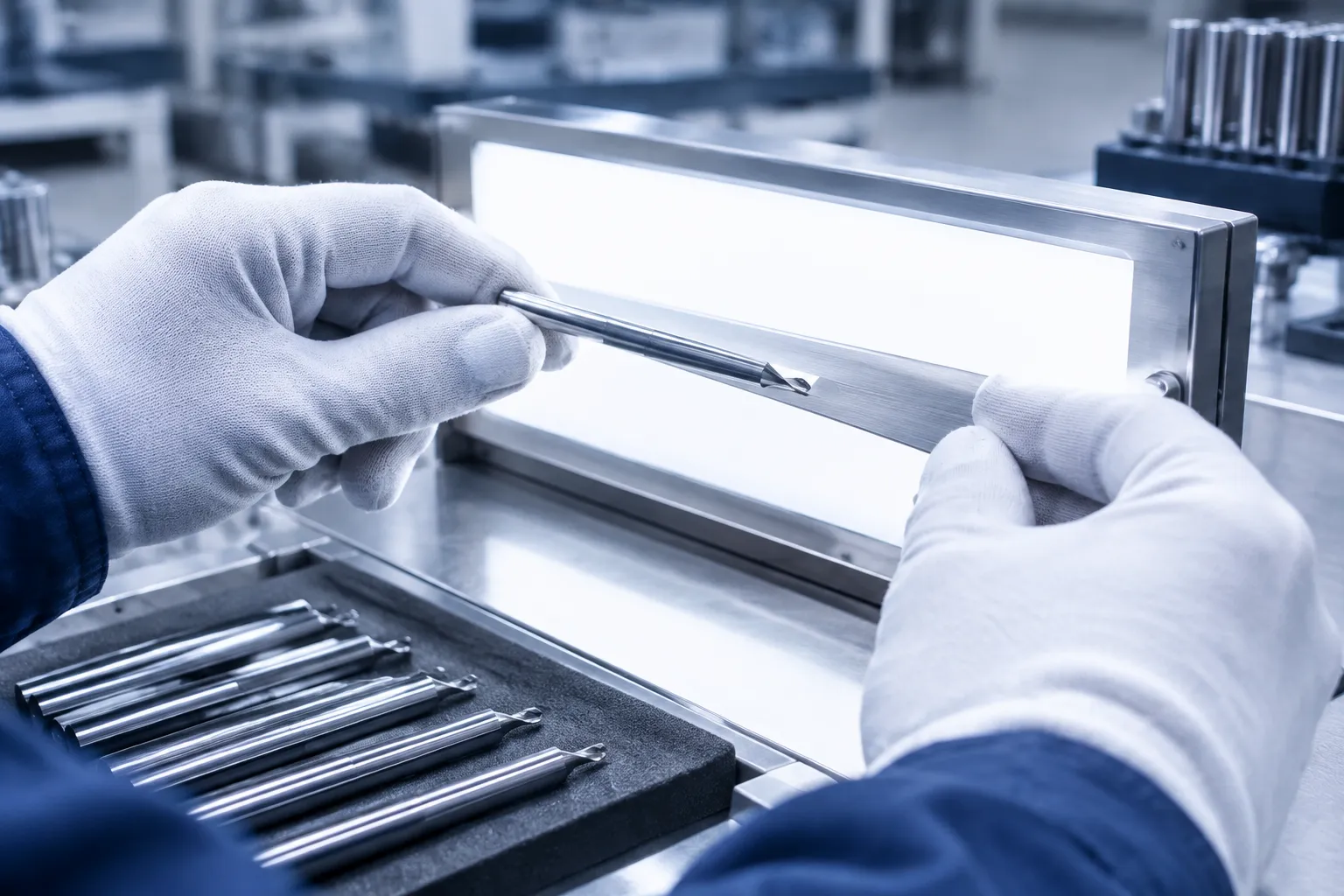
Related Medical Component Lines
- Needle straightening — guide, puncture and biopsy needles on the dedicated needle machine.
- Medical device solutions — the hub for needle, drill and wire families.
- Medical drill bits straightening machine — production cell details for drill bit lots.
FAQ
How straight must a surgical drill bit be?
Working targets are in the 0.01 mm class — measured as runout from the shank datum, not just body straightness, because the drill’s cutting path follows the axis the chuck sees.
Can dental implant micro-drills be straightened on the same machine as bone drills?
Yes — with per-recipe force and support settings. Micro-diameter work runs gentler supports and smaller press increments; the recipes are stored and recalled per drill family.
Does straightening risk cracking hardened drill blanks?
The risk is managed, not ignored: measured small increments, springback allowance for the hardened state, and crack-detection screening where the material condition warrants it.
Send drill drawings, diameters and runout targets via contact us for a medical drill straightening cell proposal.